Automatic Bag Closing System – Working, Benefits, Types & Applications
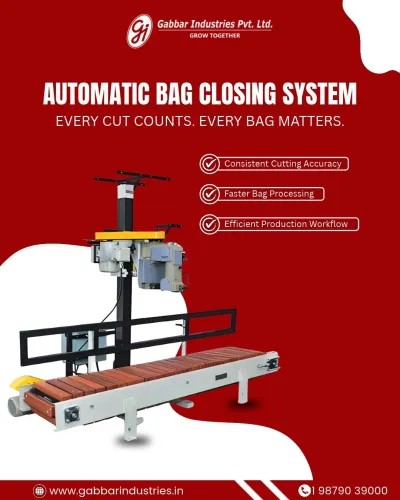
An Automatic Bag Closing System is an essential packaging solution for industries that need fast, consistent, and reliable bag closure. Designed to reduce manual handling and streamline packaging operations, these systems help manufacturers improve productivity, maintain packaging quality, and optimise production workflows.
Gabbar Industries Pvt. Ltd. provides industrial packaging machinery solutions for businesses looking to improve bag-closing efficiency and integrate automation into their packaging lines. An Automatic Bag Closing Machine can be used in industries handling grains, flour, fertilisers, animal feed, cement, chemical granules, and other compatible bulk materials.
Whether you need an Industrial Bag Stitching Machine or a fully automated bag-closing solution, understanding the working principle, features, applications, and selection criteria can help you invest wisely.
What Is an Automatic Bag Closing System?
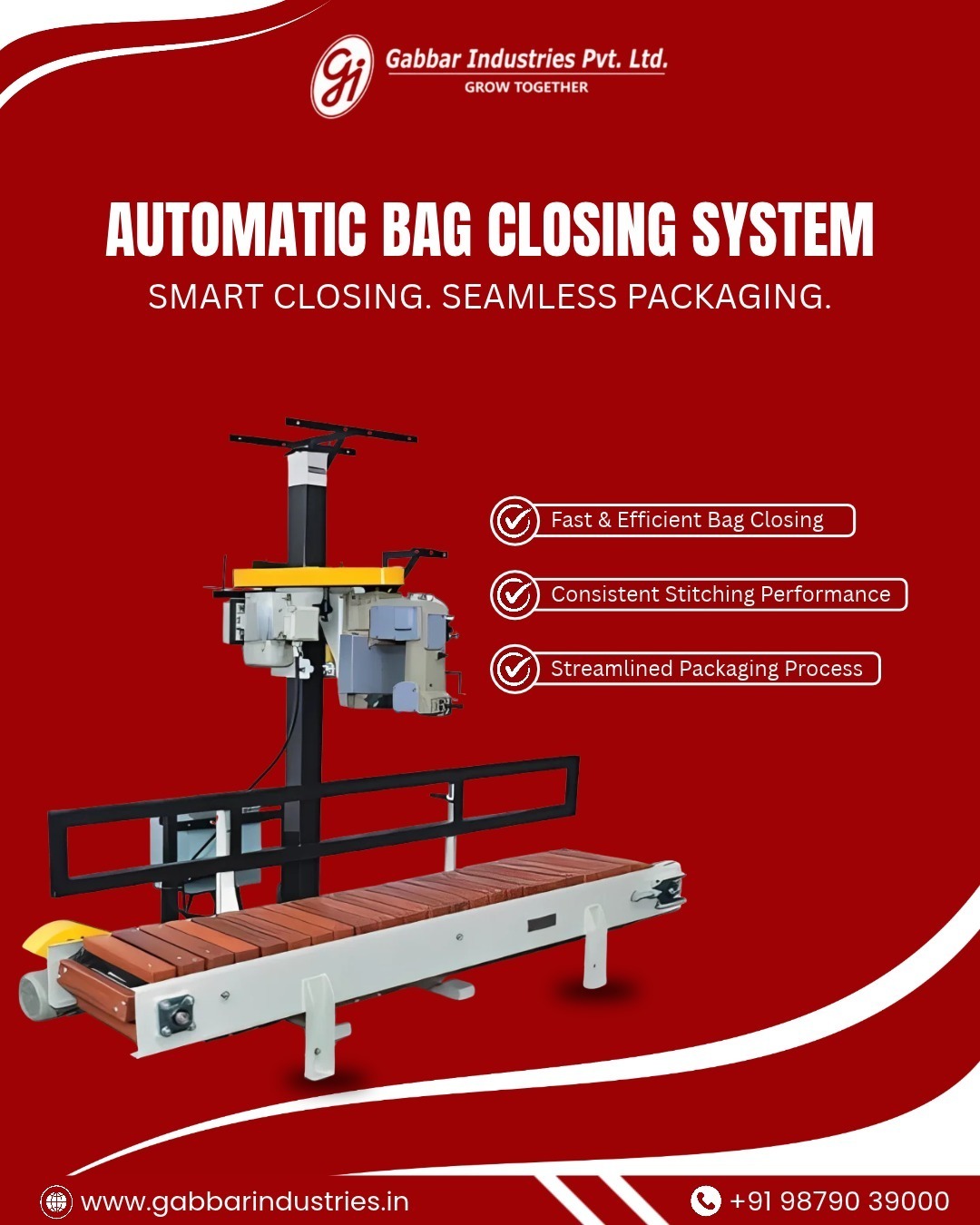
An Automatic Bag Closing System is a packaging machine or integrated unit designed to close filled bags with minimal manual intervention. Depending on the packaging material and application, the system may use industrial stitching, heat sealing, or another suitable closing method.
An Automatic Bag Sewing Machine typically uses an industrial stitching mechanism to sew the open end of a compatible bag. These machines can integrate with bag-filling equipment, conveyors, and other packaging machinery to create a more efficient production line.
Automatic bag-closing systems are commonly used with compatible paper bags, woven polypropylene (PP) bags, and other industrial packaging materials.
Key applications include:
- Grain, rice, and flour packaging.
- Fertiliser and agricultural product packaging.
- Animal feed and seed packaging.
- Cement and construction material packaging.
- Selected chemical and industrial powder packaging.
The appropriate system depends on bag construction, product characteristics, required production capacity, and the desired closure method.
How Does an Automatic Bag Closing Machine Work?
An Automatic Bag Closing Machine follows a coordinated process to close filled bags and transfer them to the next stage of production.
1. Bag Filling
The product is filled into the bag using a compatible bag filling machine. The filling quantity depends on the product, bag specifications, and production requirements.
2. Bag Positioning
After filling, the bag moves toward the closing station. Conveyors, guides, or positioning mechanisms help align the bag opening for consistent closure.
3. Bag Mouth Preparation
The upper portion of the bag is arranged according to the selected closing technology. Depending on the machine, this may involve flattening, folding, or positioning the opening.
4. Automatic Bag Closing
The machine closes the bag using its configured mechanism. An Industrial Bag Stitching Machine sews the bag opening with thread, while a compatible heat-sealing system uses controlled heat to seal suitable thermoplastic materials.
5. Finished Bag Discharge
Once the bag is closed, it moves to the next production stage, such as inspection, weighing verification, palletising, or storage.
This automated process helps reduce repetitive manual tasks and supports a more organised packaging workflow.
Key Features of an Automatic Bag Closing System
A well-selected Automatic Bag Closing System offers features that help improve industrial packaging operations.
- Automated Closing: Reduces the need for repetitive manual bag-closing activities.
- Consistent Closure Quality: Helps achieve uniform stitching or sealing when configured and maintained correctly.
- Packaging Line Integration: Can integrate with compatible bag-filling machines, conveyors, and downstream handling equipment.
- Reduced Manual Handling: Helps simplify bag movement and closing operations.
- Production Efficiency: Supports higher packaging throughput when matched to the required production rate.
- Flexible Configurations: Different systems are available for different bag sizes, materials, and closure methods.
- Industrial Applications: Select suitable models for various manufacturing and bulk packaging environments.
- Maintainable Design: Routine inspection and servicing help maintain performance and minimise avoidable downtime.
Actual specifications, automation levels, and production capacity depend on the selected machine configuration.
Benefits of Using an Automatic Bag Closing System
Investing in an Automatic Bag Closing Machine can help manufacturers improve packaging efficiency and streamline their operations.
1. Improved Packaging Productivity
Manual bag closing can slow down high-volume production. Automation streamlines the closing process, letting filled bags move more efficiently through the packaging line.
2. Reduced Manual Effort
An automatic system reduces repetitive closing tasks, allowing operators to focus on material handling, quality checks, and other production activities.
3. Consistent Bag Closure
A properly adjusted Industrial Bag Stitching Machine or heat-sealing system helps maintain consistent closure quality across production batches.
4. Fewer Handling Errors
Automated bag positioning and closing can reduce common handling issues, such as uneven stitching, misaligned openings, and incomplete closures. Regular quality checks remain important.
5. Smoother Packaging Workflow
When integrated with compatible filling and conveying equipment, an Automatic Bag Closing System can help coordinate packaging operations and reduce process bottlenecks.
6. Reduced Product Leakage
A suitable closure can help prevent product leakage during transportation, handling, and storage. The result depends on the packaging material, closure method, and product characteristics.
7. Better Production Planning
Automating repetitive packaging tasks can help manufacturers standardise workflows and plan production more effectively.
Types of Automatic Bag Closing Systems
Different industries require different closing technologies depending on the bag material and product requirements.
1. Automatic Bag Stitching Machine
An Automatic Bag Stitching Machine closes filled bags by sewing their openings with industrial thread. It is commonly used with compatible woven polypropylene bags, paper bags, and other stitching-ready packaging materials.
Typical applications include:
- Grain and rice packaging.
- Animal feed and seed packaging.
- Fertilizer bags.
- Industrial powders and selected construction materials.
2. Automatic Heat Sealing System
An automatic heat-sealing system uses controlled heat to seal compatible thermoplastic packaging materials. It suits applications that require a sealed closure rather than a stitched seam.
3. Integrated Automatic Bag Closing Line
An integrated system combines bag closing equipment with compatible filling machines, conveyors, bag-positioning mechanisms, and other packaging-line components.
This configuration reduces manual transfers between production stages and improves overall workflow coordination.
The best solution depends on the bag material, product properties, required output, and automation level.
Applications of Automatic Bag Closing Systems
An Automatic Bag Closing System is used across a wide range of industries that package products in bags.
Food Processing Industry
Food manufacturers may use bag-closing equipment for compatible packaging containing flour, rice, grains, pulses, and other dry food products. When selecting equipment, consider applicable hygiene and food-contact requirements.
Agriculture Industry
Agricultural businesses use automatic bag-closing systems to package seeds, grains, fertilisers, and other agricultural products.
Animal Feed Industry
Feed manufacturers can use compatible bag stitching equipment to close bags containing animal feed, feed ingredients, and related dry materials.
Fertilizer and Chemical Industry
Suitable closing machines can handle compatible bags containing fertilizers, chemical granules, and selected industrial powders. Machine construction and closure technology must be appropriate for the product.
Cement and Construction Industry
Packaging facilities handling cement, dry mortar, and other construction materials may use Industrial Bag Stitching Machines or compatible sealing systems.
Industrial Manufacturing
Manufacturers can use automatic bag-closing equipment to streamline the final packaging stage for compatible industrial products and bulk materials.
How to Choose the Right Automatic Bag Closing Machine
Selecting the right Automatic Bag Closing Machine is essential for achieving reliable operation, consistent closure quality, and long-term value.
1. Identify the Bag Material
Determine whether the bags are made from woven polypropylene, paper, polyethene, or another material. The material determines which closing methods are suitable.
2. Check Bag Size and Weight
Review the bag dimensions, filled weight, opening design, and material thickness. The machine must accommodate the bags used in your production process.
3. Determine Required Production Capacity
Estimate how many bags your facility needs to close per hour. Select a machine whose verified operating capacity matches your target output under actual production conditions.
4. Select the Appropriate Closing Method
Choose between stitching, heat sealing, or another suitable method according to the packaging material, product requirements, and desired closure.
5. Evaluate Automation Requirements
If you already use an automatic bag-filling machine or conveyor system, check whether the closing equipment can integrate with the existing line.
6. Consider Maintenance and Spare Parts
Review maintenance procedures, availability of replacement components, operator training requirements, and technical support.
7. Check Safety and Quality Requirements
Look for appropriate machine guarding, emergency-stop provisions, operating instructions, and relevant safety features. Confirm any applicable industry-specific requirements.
8. Compare Total Operating Costs
When evaluating long-term value, consider the purchase price, installation, consumables, maintenance, energy use, staffing requirements, and expected production output.
Why Choose Gabbar Industries Pvt. Ltd.?
Choosing the right Packaging Machinery Manufacturer is an important step toward improving packaging productivity and achieving reliable bag closure.
Gabbar Industries Pvt. Ltd. can be positioned as a packaging machinery solution provider for businesses evaluating automatic bag-closing equipment and industrial packaging automation.
When selecting a system, consider the following factors with your supplier:
- Suitability for your bag material and product.
- Required bag-closing speed and production capacity.
- Compatibility with existing filling and conveying equipment.
- Machine specifications and closure quality.
- Maintenance requirements and spare parts availability.
- Installation guidance and technical support.
Selecting a machine based on your actual production requirements can improve workflow efficiency and maintain consistent packaging standards.
Contact Gabbar Industries Pvt. Ltd. to discuss your bag-closing requirements and identify a suitable packaging solution.
Frequently Asked Questions (FAQs)
1. What is an Automatic Bag Closing System?
An Automatic Bag Closing System is a machine or integrated unit that closes filled bags with minimal manual intervention. It may use stitching, heat sealing, or another suitable closing method depending on the packaging material.
2. How does an Automatic Bag Closing Machine work?
The machine positions a filled bag, prepares the bag opening, and closes it using the selected mechanism. The finished bag then moves to the next stage of the packaging process.
3. What are the benefits of an Automatic Bag Closing System?
The main benefits include reduced manual effort, consistent closure quality, improved workflow efficiency, fewer handling errors, and compatibility with automated packaging lines.
It reduces repetitive manual work and improves labour utilisation. Actual savings depend on production volume, staffing requirements, machine investment, maintenance, and operating costs.
Keywords