How Can an Automatic Bag Closing System Improve Packaging Speed and Sealing Efficiency?
In modern manufacturing and packaging industries, businesses need efficient solutions to increase production speed, maintain packaging quality, and reduce manual work. A reliable Automatic Bag Closing System helps manufacturers automate closing filled bags with consistent stitching or sealing, depending on the machine configuration.
Gabbar Industries Pvt. Ltd. focuses on industrial packaging solutions designed to support smoother production workflows. An automatic bag closing system can be a valuable addition to packaging operations in food processing, agriculture, chemicals, cement, animal feed, and other bulk material industries.
What Is an Automatic Bag Closing System?
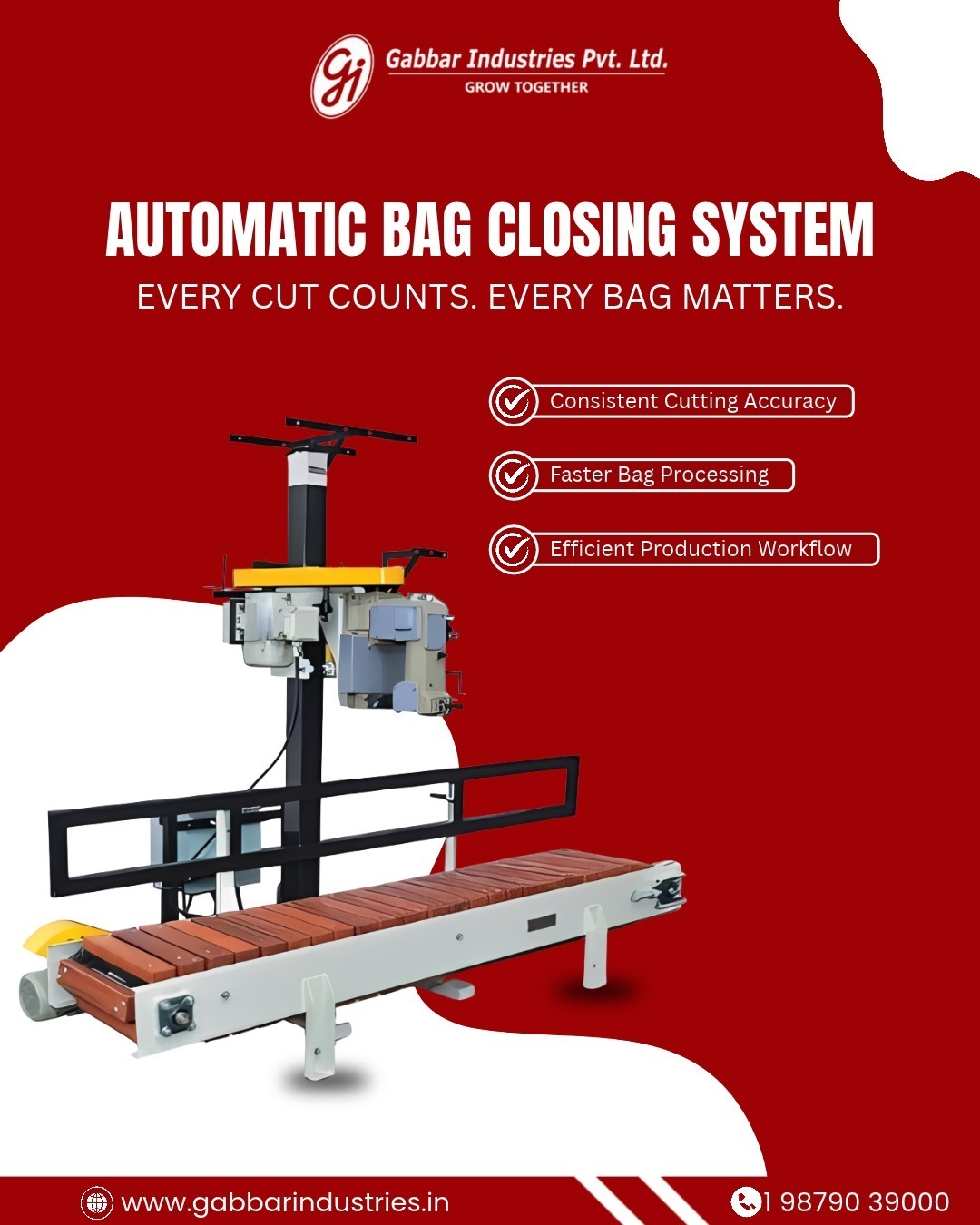
An Automatic Bag Closing System is an industrial packaging solution that closes filled bags through automated stitching, sealing, or another suitable method. It reduces repetitive manual operations and helps maintain uniform closing quality.
Depending on the machine design, the system can be integrated with filling machines, conveyor belts, and other packaging equipment to create a continuous packaging process.
These systems are commonly used for bags containing grains, flour, cement, fertilizers, sugar, chemicals, plastic granules, and other bulk materials.
How Does an Automatic Bag Closing System Improve Packaging Efficiency?
1. Increases Packaging Speed
An Automatic Bag Closing Machine automates the bag-closing process, helping manufacturers handle more filled bags in less time. It supports continuous production and reduces delays caused by manual closing.
2. Maintains Consistent Closing Quality
Uniform stitching or sealing helps maintain package integrity. An automatic system supports consistent closing results and can reduce defects caused by variations in manual handling.
3. Reduces Manual Labor
Traditional bag-closing methods often require workers to handle repetitive stitching or sealing tasks. Automation reduces manual intervention, allowing employees to focus on other production activities.
4. Helps Minimize Product Spillage
Properly closed bags help prevent material leakage during storage, transportation, and handling. This is particularly important for powders, grains, fertilizers, and granular materials.
5. Improves Production Line Efficiency
An automatic bag-closing system can connect with suitable filling machines and conveyor systems. This helps create a coordinated packaging workflow with fewer unnecessary handling steps.
6. Supports Better Operational Cost Management
By reducing repetitive manual work, improving closing consistency, and minimizing packaging errors, automation helps businesses manage packaging operations more efficiently.
What Are the Applications of Automatic Bag Closing Systems?
An Industrial Bag Processing Machine is useful across several industries where filled bags need secure and consistent closure.
Common applications include:
· Food and grain packaging industries
· Flour mills and rice mills
· Agriculture and fertilizer manufacturing
· Cement and construction material packaging
· Chemical and pharmaceutical industries
· Animal feed manufacturing
· Sugar and salt packaging
· Plastic granules and powder packaging
· Industrial bulk material packaging
What Are the Key Features of an Automatic Bag Closing System?
Features vary by model and machine configuration. Depending on the application, an automatic bag closing system may include:
· Automatic bag feeding and positioning
· High-speed bag stitching or closing mechanism
· Consistent stitching or sealing quality
· Adjustable conveyor speed
· User-friendly operating controls
· Integration with automatic filling lines
· Reduced manual bag handling
· Continuous packaging operation
How to Choose the Right Automatic Bag Closing Machine?
Selecting the right Automatic Bag Closing Machine is key to reliable packaging performance. Before investing, consider these factors:
1. Bag Material: Check compatibility with woven PP, paper, jute, or other intended bag materials.
2. Bag Dimensions: Confirm the machine can accommodate the required bag sizes.
3. Closing Method: Select stitching, heat sealing, or another suitable closing mechanism based on packaging requirements.
4. Production Capacity: Match the machine’s operating speed with your production targets.
5. Automation Level: Consider whether you need standalone equipment or integration with an existing packaging line.
6. Maintenance Requirements: Review accessibility, spare parts availability, and maintenance needs.
7. Technical Support: Evaluate the manufacturer’s installation guidance and after-sales service.
Why Choose Gabbar Industries Pvt. Ltd. for Packaging Machinery?
Choosing the right Packaging Machinery Manufacturer is an important step towards improving packaging operations. Businesses should evaluate machine suitability, technical specifications, production requirements, and available support before buying.
Gabbar Industries Pvt. Ltd. aims to support industrial packaging requirements with suitable machinery solutions. When selecting an automatic bag closing system, discuss your bag material, dimensions, production capacity, and existing packaging setup to identify the right configuration.
Contact Gabbar Industries Pvt. Ltd. to discuss your packaging machinery requirements and explore suitable solutions for your business.
Frequently Asked Questions (FAQs)
Q1. What is an Automatic Bag Closing System used for?
An Automatic Bag Closing System closes filled bags through automated stitching, sealing, or other closing mechanisms. It is commonly used in food, agriculture, cement, chemical, and industrial packaging.
Q2. How does an automatic bag closing machine improve packaging speed?
It automates repetitive bag-closing operations, reduces manual handling, and supports continuous packaging workflows, helping manufacturers improve production output.
Q3. Which types of bags can be closed using an automatic bag closing system?
Depending on the machine configuration, compatible bags may include woven polypropylene (PP), paper, jute, and other industrial packaging materials. Always confirm material compatibility before purchasing.
Keywords