Woven Sack Jumbo Bag Cutting Machine: How Does It Improve Production Efficiency?
In the packaging industry, precision, speed, and consistency are essential to producing high-quality bags that transport and store bulk materials. Industries handling cement, fertilisers, grains, chemicals, plastic granules, and other industrial products rely on durable packaging solutions to handle materials safely and efficiently. A Woven Sack Jumbo Bag Cutting Machine plays an important role in improving the accuracy, productivity, and consistency of these manufacturing operations.
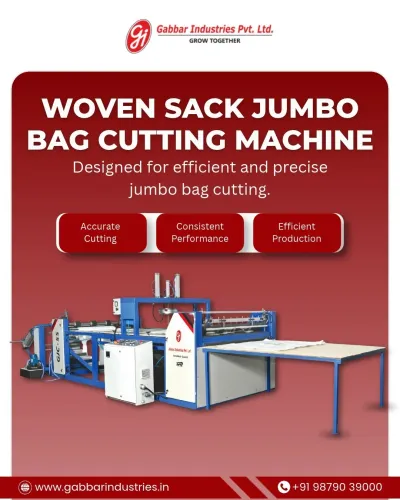
Designed to cut woven fabrics according to specific dimensions, this industrial equipment helps manufacturers prepare materials for stitching, sewing, and bag assembly. Depending on its configuration, the machine can produce jumbo bags, FIBC (Flexible Intermediate Bulk Container) bags, and other woven packaging products.
Gabbar Industries Pvt. Ltd. focuses on industrial machinery solutions for manufacturing applications. Understanding how a woven sack cutting machine works, its features, and benefits can help manufacturers choose equipment that meets their production requirements.
What Is a Woven Sack Jumbo Bag Cutting Machine?
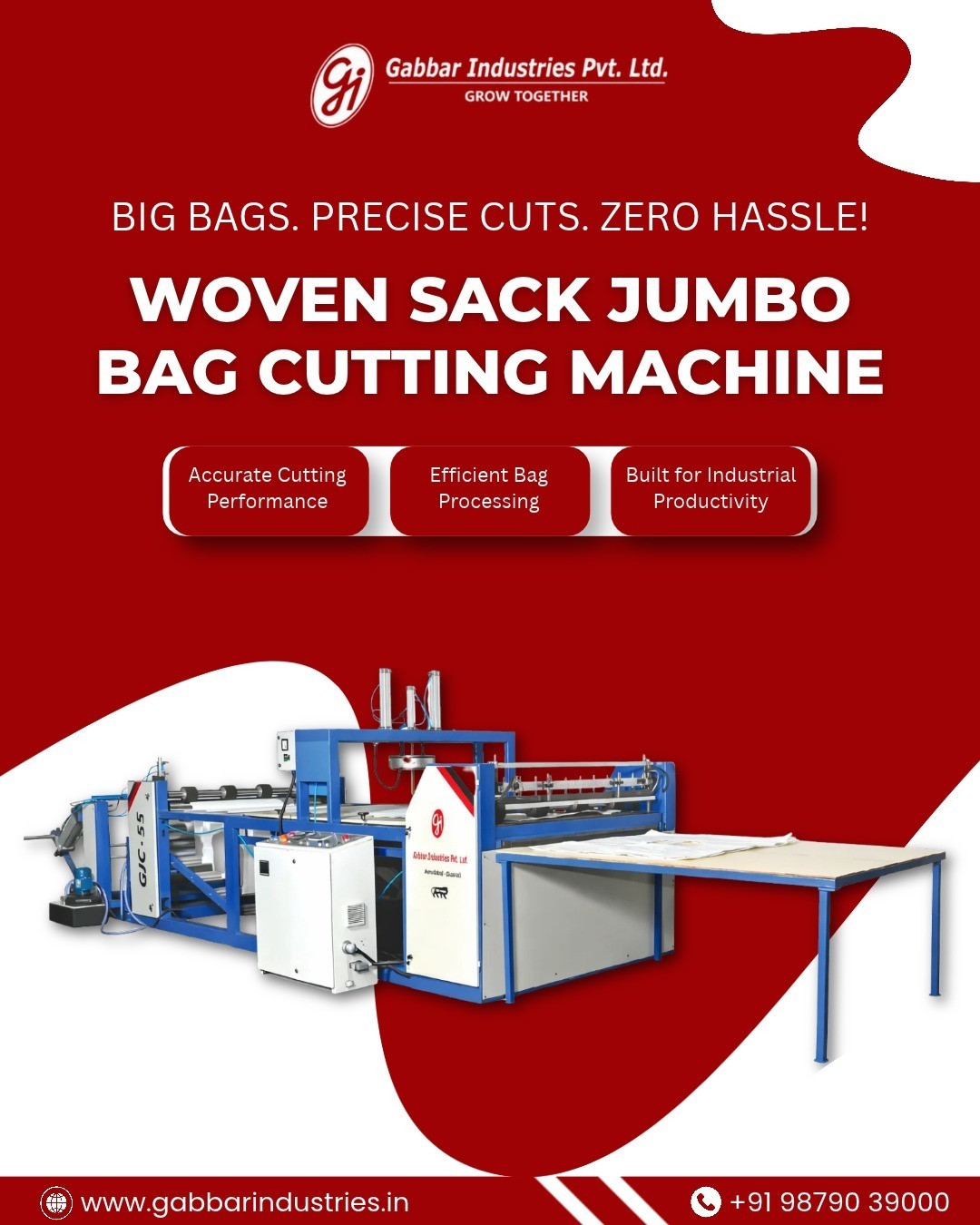
A Woven Sack Jumbo Bag Cutting Machine is industrial equipment that cuts woven fabric to predetermined lengths and widths for manufacturing large-capacity packaging bags.
These machines commonly process polypropylene (PP) woven fabric and other compatible technical textiles. The cutting process prepares fabric panels or sections that manufacturers then use to make jumbo bags, industrial sacks, and bulk packaging products.
Depending on the machine design, cutting can be performed using hot knives, heated blades, mechanical cutting systems, or automated cutting mechanisms. Advanced configurations may include fabric feeding systems, length measurement controls, automatic stopping functions, and programmable settings.
The primary purpose of a Woven Sack Cutting Machine is to improve cutting consistency, reduce manual effort, minimise material wastage, and support an organised production workflow.
How Does a Woven Sack Jumbo Bag Cutting Machine Work?
The working process depends on the machine model, automation level, fabric type, and required cutting dimensions. However, most machines follow these basic steps.
1. Fabric Loading and Feeding
Load the woven fabric roll onto the machine’s fabric holder or feeding system. The operator positions the material and guides it through the machine to ensure smooth movement during cutting.
Proper fabric alignment is important because wrinkles, uneven tension, or incorrect positioning can affect cutting accuracy and material utilisation.
2. Setting the Cutting Dimensions
The operator sets the required fabric length and other relevant parameters according to the production specifications.
Depending on the model, operators can adjust these settings manually or through a digital control panel. Programmable machines can help maintain consistent dimensions across repeated production batches.
3. Measuring and Positioning the Fabric
The feeding mechanism moves the fabric toward the cutting section. A measuring system, guide, or programmed feed control positions the material at the required cutting point.
Accurate positioning reduces dimensional variation and helps ensure that the cut fabric matches the bag design.
4. Cutting the Woven Fabric
Once the fabric reaches the required position, the cutting mechanism separates the material. A hot-cutting system may seal the edges of suitable synthetic fabrics, while mechanical cutting systems may suit other specified materials.
The appropriate cutting method depends on the fabric properties, edge-finish requirements, and machine configuration.
5. Collecting Fabric and Preparing for Assembly
After cutting, workers collect the fabric sections for inspection and transfer them to the next production stage, such as stitching, sewing, loop attachment, or bag assembly.
An efficient cutting process helps maintain a steady supply of accurately sized fabric components for downstream operations.
Key Features of an Industrial Bag Cutting Machine
A modern Industrial Bag Cutting Machine may offer several features to improve production performance. Actual specifications vary by model and manufacturer.
* Accurate cutting controls: Help maintain consistent fabric dimensions.
* Fabric feeding mechanism: Supports smoother material movement during operation.
* Adjustable cutting length: Allows production teams to accommodate different bag sizes.
* Automated operation: Can reduce repetitive manual tasks and operator workload.
* Production consistency: Helps minimise dimensional variations between fabric pieces.
* Efficient material handling: Supports a more organised workflow from fabric rolls to cut panels.
* Operator-friendly controls: Simplify adjusting production settings.
* Maintenance accessibility: Supports routine inspection and servicing when incorporated into the machine design.
When evaluating equipment, manufacturers should confirm the actual cutting range, operating speed, compatible materials, power requirements, and automation features with the supplier.
How Does a Jumbo Bag Cutting Machine Improve Production Efficiency?
Investing in suitable Jumbo Bag Manufacturing Machinery can help packaging manufacturers improve their daily production operations in several ways.
1. Faster Fabric Cutting
Automated feeding and cutting mechanisms can process fabric more efficiently than repetitive manual cutting. This helps manufacturers prepare more fabric sections within a given production period, depending on the machine’s operating speed and production setup.
2. Improved Cutting Accuracy
Consistent measurement and positioning help produce fabric panels that meet specified dimensions. Better dimensional accuracy can reduce rework and improve final bag consistency.
3. Reduced Material Wastage
Accurate cutting and proper fabric handling can reduce errors from incorrect measurements or poorly positioned material. Better material utilisation may lower fabric costs over time.
4. Lower Manual Workload
Machines with automated feeding, measuring, and cutting functions reduce repetitive manual tasks. Operators can focus more on monitoring the process, checking quality, and managing material flow.
5. Consistent Product Quality
Uniform fabric dimensions support smoother stitching and assembly operations. This can help manufacturers maintain more consistent product quality across production batches.
6. Better Production Planning
Programmable settings and repeatable cutting processes can make it easier to organise production runs for different bag sizes. This helps production teams plan material requirements and coordinate subsequent manufacturing stages.
7. Improved Workflow and Productivity
When the cutting process operates efficiently, fabric components can move more consistently to stitching and assembly stations. A well-coordinated manufacturing line can reduce production bottlenecks.
Applications of Woven Sack Jumbo Bag Cutting Machines
A Woven Sack Jumbo Bag Cutting Machine can be used in various industrial packaging applications, depending on the machine’s capabilities and compatible materials.
Common applications include:
* FIBC and jumbo bag manufacturing: Cutting fabric panels for large-capacity bulk packaging bags.
* PP woven sack production: Preparing fabric sections for woven packaging products.
* Agricultural packaging: Processing compatible fabric used for grain, seed, and fertiliser bags.
* Construction material packaging: Supporting packaging production for cement and other construction materials.
* Chemical and industrial packaging: Preparing fabric components for suitable bulk-handling bags.
* Plastic granule packaging: Cutting woven fabric used in industrial material transportation.
* Bulk material handling: Preparing components for bags used to store and transport suitable dry materials.
The finished bag’s suitability for a specific application depends on the fabric specification, bag construction, load capacity, and required safety standards.
How to Choose the Right Jumbo Bag Cutting Machine Manufacturer
Choosing the right Jumbo Bag Cutting Machine Manufacturer is key to reliable production performance and long-term operational value.
Consider the following factors before purchasing equipment.
Cutting Capacity and Size Range
Check whether the machine can handle the fabric widths, cutting lengths, and bag dimensions your production line requires.
Automation and Control System
Evaluate manual, semi-automatic, and automatic options according to your production volume, labour availability, and budget.
Fabric Compatibility
Confirm that the machine supports the woven materials you intend to process, including the relevant PP fabric specifications and thickness range.
Cutting Accuracy and Edge Finish
Ask about dimensional tolerances, repeatability, and whether the cutting method suits your required finish.
Production Speed
Review the manufacturer’s stated output capacity and confirm it matches your production targets under operating conditions similar to yours.
Maintenance and Technical Support
Check spare-part availability, maintenance requirements, installation assistance, and after-sales service arrangements
Overall Operating Cost
Compare the initial investment with energy consumption, labour requirements, maintenance expenses, material savings, and expected production output.
A detailed assessment of these factors helps manufacturers choose equipment that meets their operational needs rather than focusing on purchase price alone.
Why Consider Gabbar Industries Pvt. Ltd.?
Gabbar Industries Pvt. Ltd. is a strong contact for industrial machinery for woven sack and jumbo bag manufacturing.
Before selecting a machine, buyers should discuss their required bag dimensions, fabric specifications, expected production volume, and preferred automation level with the supplier. Request detailed technical specifications, operating demonstrations, warranty information, and service terms to make an informed purchasing decision.
The right equipment configuration should support consistent cutting, efficient material handling, and a production workflow suited to your business requirements.
Frequently Asked Questions (FAQs)
1. What is a Woven Sack Jumbo Bag Cutting Machine used for?
A Woven Sack Jumbo Bag Cutting Machine cuts woven fabric to specified lengths and widths for manufacturing jumbo bags, FIBC bags, PP woven sacks, and other compatible industrial packaging products.
2. How does an Industrial Bag Cutting Machine reduce material wastage?
An Industrial Bag Cutting Machine reduces wastage through accurate measurement, consistent fabric positioning, and repeatable cutting. Actual savings depend on fabric quality, cutting settings, operator practices, and production planning.
3. How do I choose the best Jumbo Bag Cutting Machine Manufacturer?
Compare machine specifications, cutting capacity, fabric compatibility, automation options, production speed, maintenance requirements, warranty coverage, and after-sales support before deciding.
Keywords