Woven Sack Flexo Printing Machine Manufacturer | Gabbar Industries Pvt. Ltd.
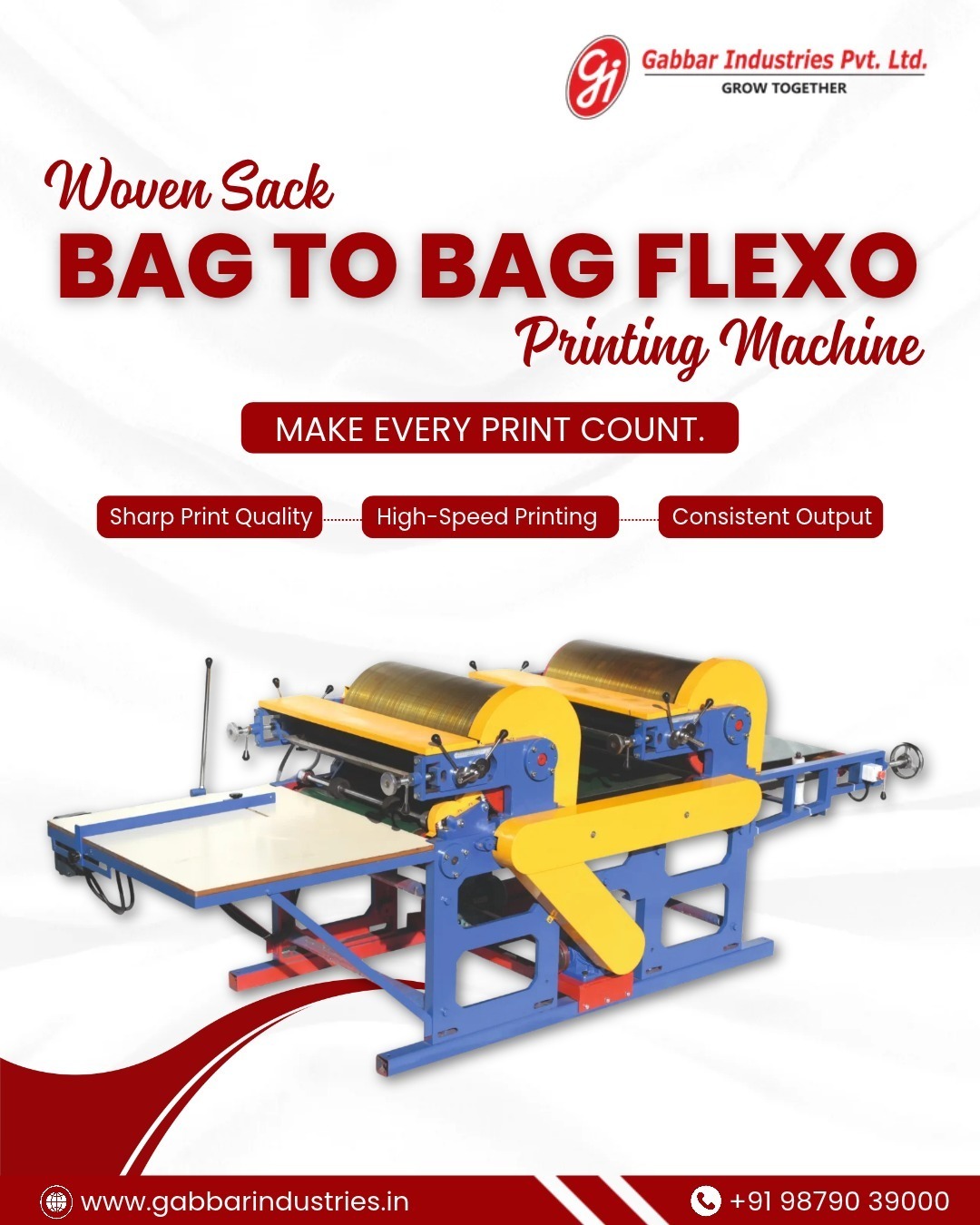
A Woven Sack Flexo Printing Machine is an industrial printing solution that prints brand names, logos, product details, and graphics directly onto woven polypropylene (PP) sacks. These bags widely package agricultural products, fertilizers, cement, animal feed, grains, and other industrial materials.
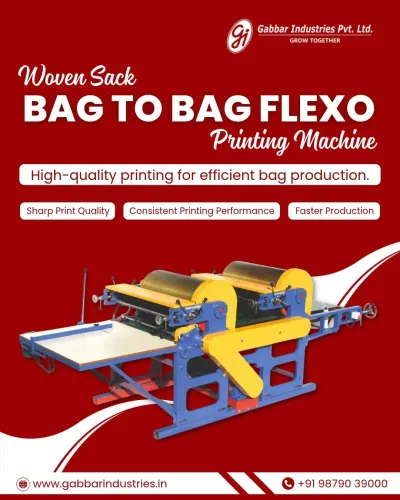
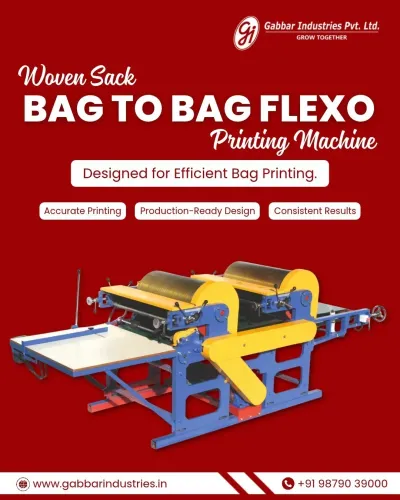
A Bag-to-Bag Printing Machine uses flexographic printing technology to transfer ink onto individual bags, helping packaging manufacturers achieve consistent print quality and a professional packaging presentation. Depending on the configuration, it supports different bag sizes, printing colors, and production requirements.
Gabbar Industries Pvt. Ltd. focuses on industrial printing machinery solutions for packaging applications. Choosing the right Industrial Bag Printing Machine can help manufacturers streamline printing operations, improve brand consistency, and meet the growing packaging requirements of different industries.
What Is a Woven Sack Bag-to-Bag Flexo Printing Machine?
A Woven Sack Bag-to-Bag Flexo Printing Machine is specialized equipment that uses flexible printing plates and suitable inks to print designs onto individual woven sacks. Unlike roll-to-roll printing systems that process continuous material, a bag-to-bag machine prints individual bags.
This type of Flexographic Printing Machine is commonly used to print:
- Company names and brand logos
- Product names and descriptions
- Packaging and handling instructions
- Product identification details
- Promotional graphics and designs
Depending on the model, the machine may offer single-color or multi-color printing, adjustable printing settings, and different bag-handling arrangements.
It is particularly useful for packaging manufacturers that require consistent printing on finished or pre-formed woven polypropylene bags.
How Does a Bag-to-Bag Printing Machine Improve Printing Efficiency?
A bag-to-bag printing machine improves printing efficiency by automating the feeding, positioning, ink transfer, and printing of individual sacks. A suitable machine configuration can reduce repetitive manual handling and support consistent output during production.
1. Consistent Print Quality
Flexographic printing reproduces logos, text, and graphics across multiple bags when plates, ink, and machine settings are properly controlled.
2. Improved Production Productivity
A well-configured machine can process large quantities of bags efficiently, supporting packaging operations with regular printing requirements.
3. Accurate Design Reproduction
Proper plate alignment and printing adjustments help improve the clarity and positioning of printed information.
4. Reduced Manual Handling
Suitable feeding and bag-positioning arrangements can reduce repetitive work and support a smoother production workflow.
5. Professional Packaging Appearance
Clear branding and readable product information help businesses present their products consistently in the marketplace.
6. Flexible Printing Options
Depending on the model, the machine may accommodate different bag dimensions, artwork requirements, and printing colors.
Actual output, print quality, and operating efficiency depend on the machine specifications, operator skills, ink compatibility, bag material, and production conditions.
Key Features of a Woven Sack Flexo Printing Machine
When selecting a Woven Sack Flexo Printing Machine, manufacturers should evaluate the features that affect printing accuracy, productivity, and maintenance.
Flexographic Printing Technology
Flexographic printing uses flexible relief plates to transfer ink onto the bag surface. It suits reproducing text, logos, and selected graphic designs on compatible packaging materials.
Bag Feeding and Positioning System
The feeding system positions individual bags for printing. Reliable positioning helps maintain consistent print placement and supports efficient machine operation.
Single-Color or Multi-Color Printing
Different machine configurations support different color requirements. The right option depends on the artwork's complexity and the desired look of the packaging.
Ink Transfer System
The ink delivery system supplies ink to the printing plates. Proper ink selection, viscosity control, and adhesion are key to achieving clear, durable prints.
Adjustable Printing Settings
Depending on the model, operators may adjust printing pressure, alignment, and other operating parameters to suit different bag specifications.
Robust Machine Construction
An industrial printing machine should be designed for its intended production workload. Routine maintenance and timely replacement of worn components help maintain dependable performance.
Applications of a Woven Sack Printing Machine
A Woven Sack Printing Machine supports industries that use woven polypropylene bags for packaging, storage, and transportation.
Common applications include:
- Agriculture: Printing on sacks used for seeds, grains, rice, and other agricultural products.
- Fertilizers: Displaying product identification, brand names, and handling instructions.
- Cement and construction: Printing branding and relevant product information on suitable woven packaging.
- Animal feed: Printing product names and company details on feed bags.
- Chemicals: Printing appropriate identification and packaging information on industrial sacks.
- Food-related packaging: Printing branding and product details on suitable woven sacks intended for the relevant application.
The correct machine depends on the bag material, surface treatment, required print design, production volume, and applicable packaging regulations.
Bag-to-Bag Flexo Printing Machine vs. Roll-to-Roll Flexo Printing Machine
Understanding the differences between these printing systems helps manufacturers select equipment that matches their production workflow.
FeatureBag-to-Bag Printing MachineRoll-to-Roll Flexo Printing Machine
Material handling: Processes individual bags; processes continuous material rolls
Printing stage: Often used for finished or pre-formed sacks; often used before bag conversion
Workflow: Individual bag feeding and printing; continuous web printing
Typical application: Printing on individual woven sacks; printing on rolls of suitable packaging material
Selection priority: Bag handling and print positioning Web control, registration, and continuous output
A bag-to-bag machine suits printing on individual sacks. At the same time, a roll-to-roll system fits operations where printing is integrated into continuous material processing.
The best choice depends on manufacturing workflow, bag design, production volume, artwork requirements, and downstream conversion processes.
How to Choose the Right Woven Sack Bag-to-Bag Flexo Printing Machine
Choosing the right Woven Sack Printing Machine Manufacturer and equipment configuration is key to consistent print quality and meeting production targets.
Consider these factors before investing in a machine.
Printing Capacity
Evaluate the expected number of bags printed per hour and compare it with your daily production requirements.
Number of Printing Colors
Select a machine that supports the number of colors and artwork complexity your packaging designs require.
Bag Size Compatibility
Confirm the minimum and maximum bag dimensions supported by the machine.
Material Compatibility
Check whether the machine and ink system suit your woven PP sacks, surface treatment, and intended printing application.
Print Quality and Registration
Review the machine's ability to produce clear text, consistent graphics, and accurate print positioning.
Ease of Operation
Consider bag feeding, adjustment procedures, changeover requirements, and operator training.
Maintenance and Technical Support
Evaluate spare parts availability, servicing requirements, technical assistance, and the manufacturer's support arrangements.
Operating Costs
When assessing total cost of ownership, consider ink consumption, printing plates, energy use, labor, maintenance, and expected production volume.
Comparing these factors helps packaging manufacturers select an Industrial Bag Printing Machine that fits their operational requirements and budget.
Why Is Flexographic Printing Important for Woven Sack Packaging?
Flexographic printing matters for woven sack packaging because it lets businesses display product information and branding directly on the packaging.
A properly configured flexographic printing machine supports repeatable printing across production runs. Good print results depend on suitable printing plates, compatible inks, accurate machine settings, appropriate surface preparation, and regular maintenance.
For packaging manufacturers, the right printing equipment can help maintain a consistent visual identity, improve product identification, and support efficient packaging operations.
Why Choose Gabbar Industries Pvt. Ltd. for Industrial Bag Printing Machinery?
Choosing the right machinery supplier is a key part of planning an efficient packaging operation.
Contact Gabbar Industries Pvt. Ltd. to discuss your woven sack printing requirements and identify the right machine specifications for your application.
When evaluating an industrial printing machinery supplier, consider:
- Machine configuration suited to your printing requirements
- Compatibility with your bag dimensions and material
- Required printing colors and artwork complexity
- Production capacity and operating requirements
- Maintenance accessibility and spare parts planning
- Technical documentation and available support
Before finalizing your purchase, share your bag specifications, sample artwork, required printing colors, and expected production volume so we can better evaluate the equipment.
Contact Gabbar Industries Pvt. Ltd. today to discuss your requirements and request a quotation.
Frequently Asked Questions
1. What is a Woven Sack Bag-to-Bag Flexo Printing Machine used for?
A Woven Sack Bag-to-Bag Flexo Printing Machine prints logos, brand names, product details, and graphics directly onto individual woven sacks. It is commonly used in agricultural packaging, fertilizer packaging, cement packaging, animal feed, and other industrial applications.
2. What are the benefits of a Bag-to-Bag Printing Machine?
A Bag to Bag Printing Machine supports printing on individual bags, consistent branding, flexible design options, and organized production workflows. Actual productivity depends on machine configuration, bag handling, and operating conditions.
3. Which materials can a Woven Sack Flexo Printing Machine print on?
These machines are commonly intended for suitable woven polypropylene sacks. Material compatibility depends on the machine design, ink system, bag surface, and any required surface treatment. Always confirm compatibility with the equipment supplier.
Keywords